04

NEWS / FIELD NOTES

Signals from
the laboratory.

Research stories, public conversations, and the ideas that connect a flat optical surface to the world around it.

SELECTED STORIES / 2011—2026

Research,
in public.

A reverse-chronological archive of selected work—from neutral atoms and structural-color photonic crystals to the optical intelligence of living systems.

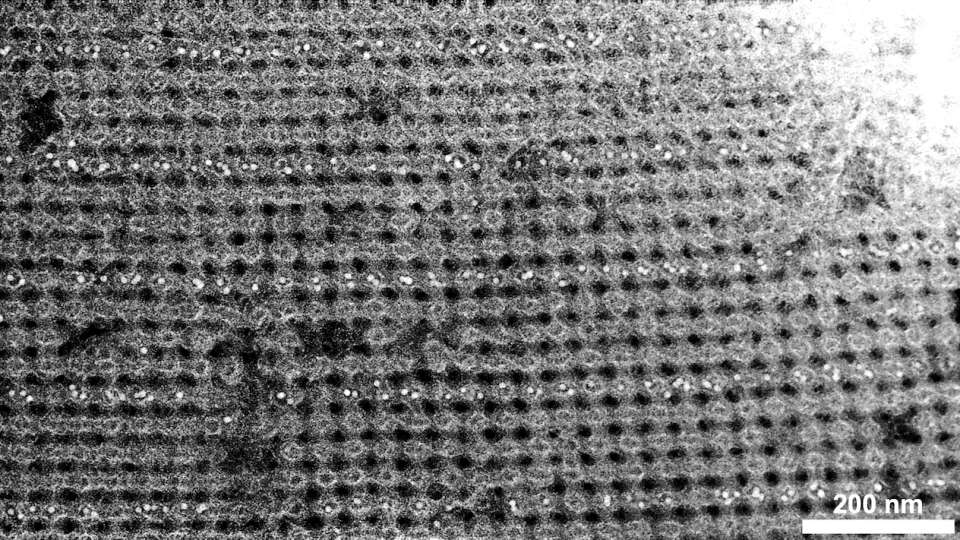
Electron microscopy image of a DNA-programmed nanoparticle crystal
CLEO 2026 / STRUCTURAL COLOR

Building photonic crystals with DNA.

DNA origami guides gold nanoparticles into three-dimensional photonic crystals whose collective optical response produces tunable, high-reflectance, and pure structural colors—a bottom-up route to precisely designed optical materials.

Read the story

Electron microscopy: Oleg Gang / Columbia Engineering
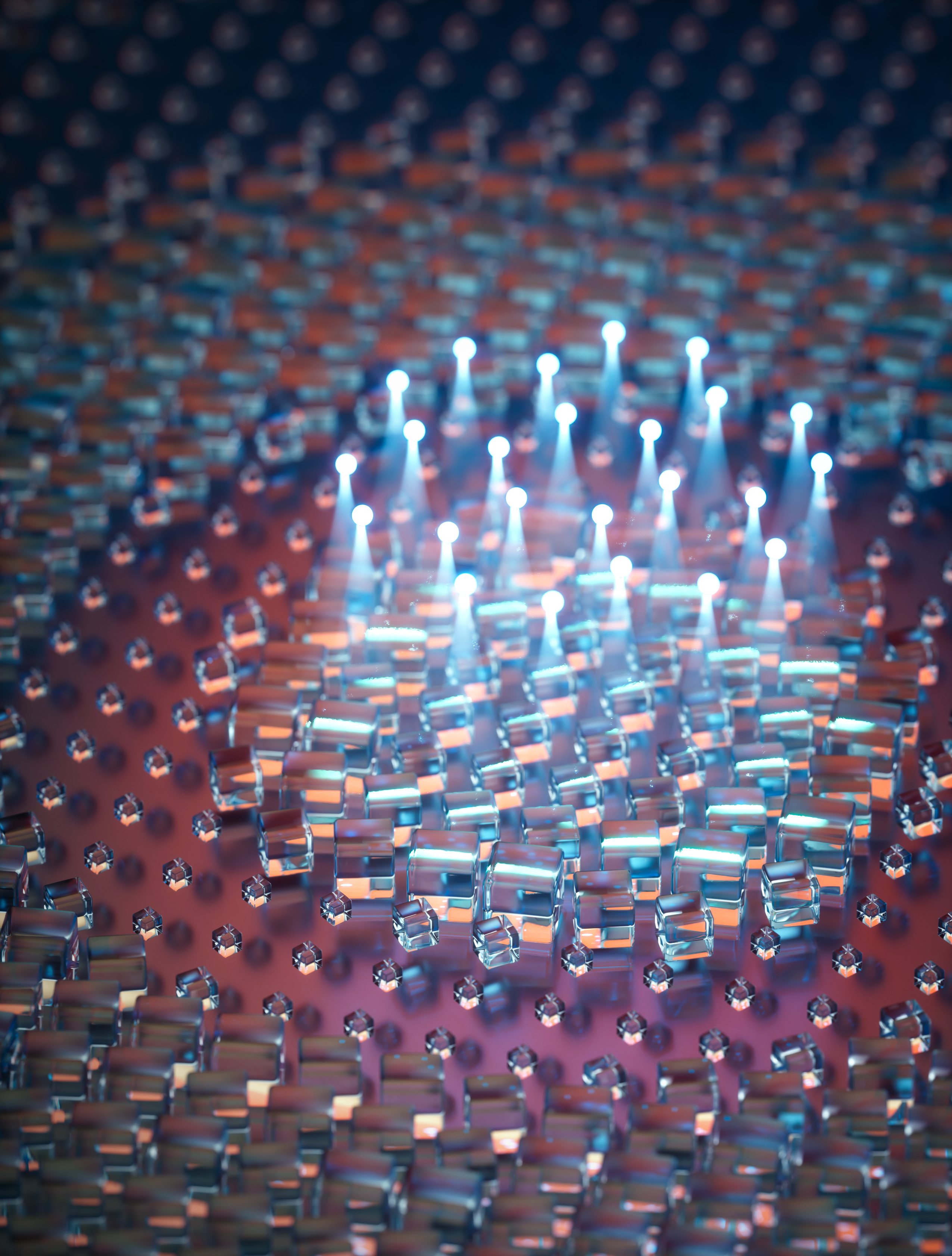
Metasurface optical-tweezer array trapping individual atoms
NATURE / QUANTUM META-OPTICS

Trapping single atoms with a flat optic.

Holographic metasurfaces generate diffraction-limited optical tweezers, trap individual strontium atoms in arbitrary two-dimensional geometries, and scale to a demonstrated 360,000-trap array—turning a planar optic into a path toward large, programmable neutral-atom systems.

Read the story

Image: Nanfang Yu Lab

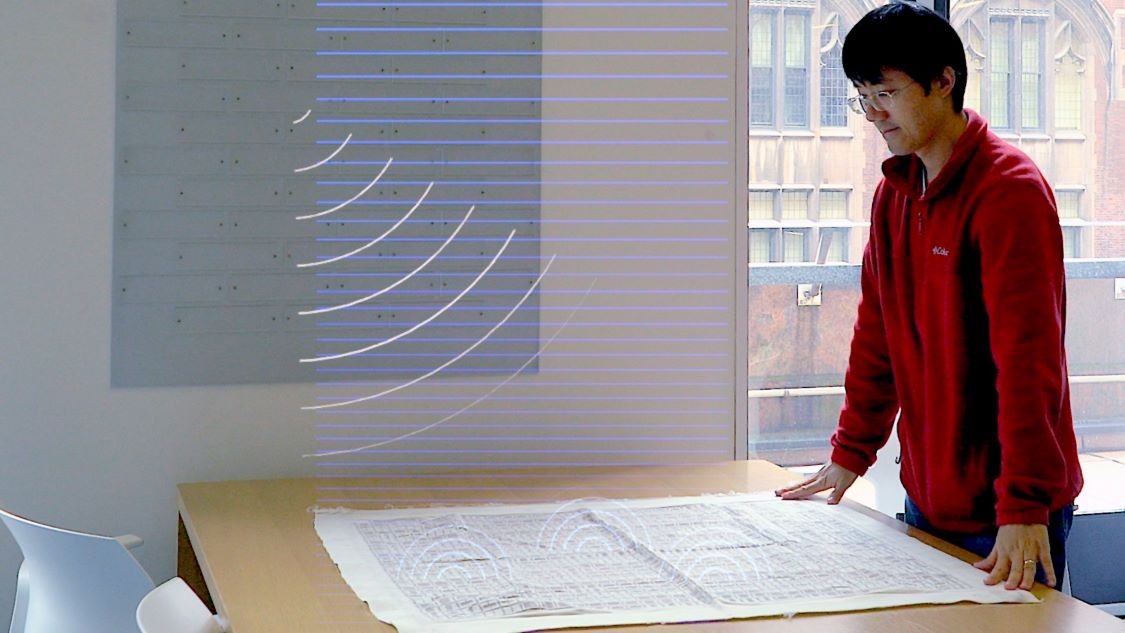
Nanfang Yu examining a knitted textile metasurface
COLUMBIA ENGINEERING / RF METASURFACES

When a blanket becomes an antenna.

Traditional flat knitting becomes a scalable electromagnetic manufacturing platform: metallic and dielectric yarns form flexible, lightweight radio-frequency metasurfaces that can be folded, carried, and deployed.

Read the story

Photo: Michael Carter and Nanfang Yu / Columbia Engineering

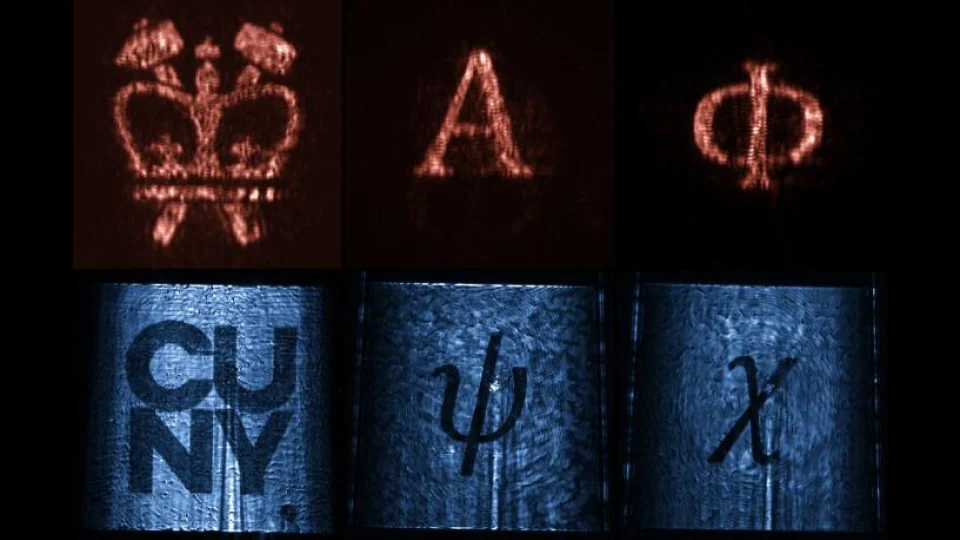
Holographic images generated by leaky-wave metasurfaces
COLUMBIA ENGINEERING / INTEGRATED PHOTONICS

Where guided light meets open space.

Leaky-wave metasurfaces transform a mode confined on a photonic chip into designer free-space fields, controlling amplitude, phase, and polarization together. The interface connects integrated processing with communications, holography, sensing, and atomic physics.

Read the story

Image: Heqing Huang, Adam Overvig and Nanfang Yu / Columbia Engineering

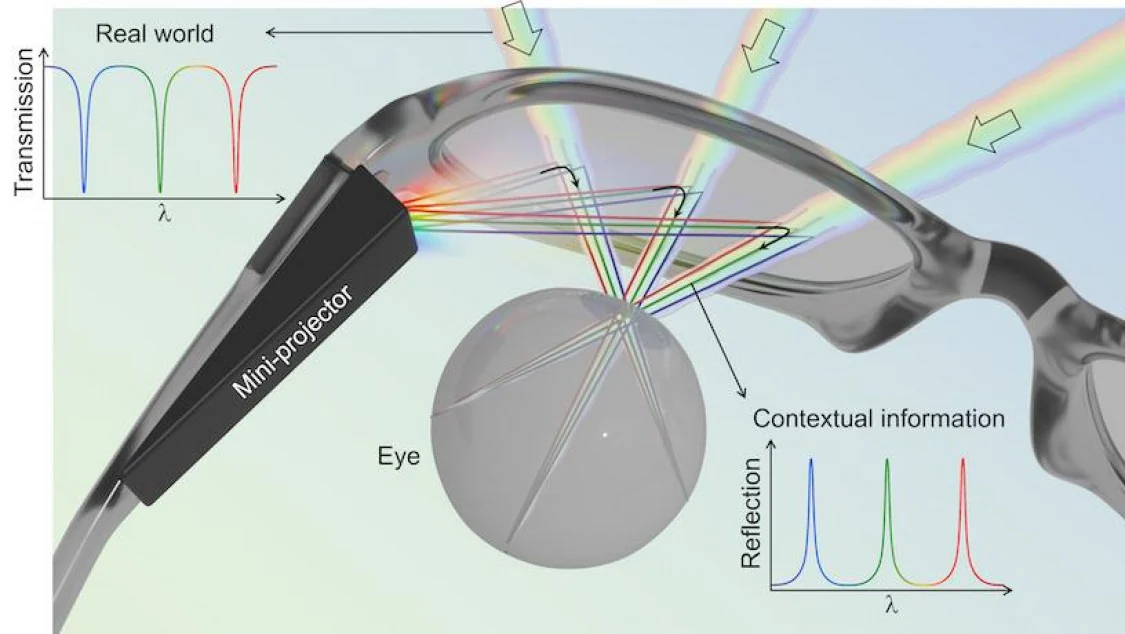
Augmented-reality glasses enabled by wavelength-selective nonlocal metasurfaces
COLUMBIA ENGINEERING / NONLOCAL METASURFACES

Glass that becomes a lens—only when asked.

A wavelength-selective nonlocal metasurface shapes chosen colors while remaining transparent to the rest of the spectrum. The same principle points toward lighter augmented-reality optics and more compact multiwavelength systems for cold atoms.

Read the story

Illustration: Nanfang Yu, Stephanie Malek and Adam Overvig / Columbia Engineering

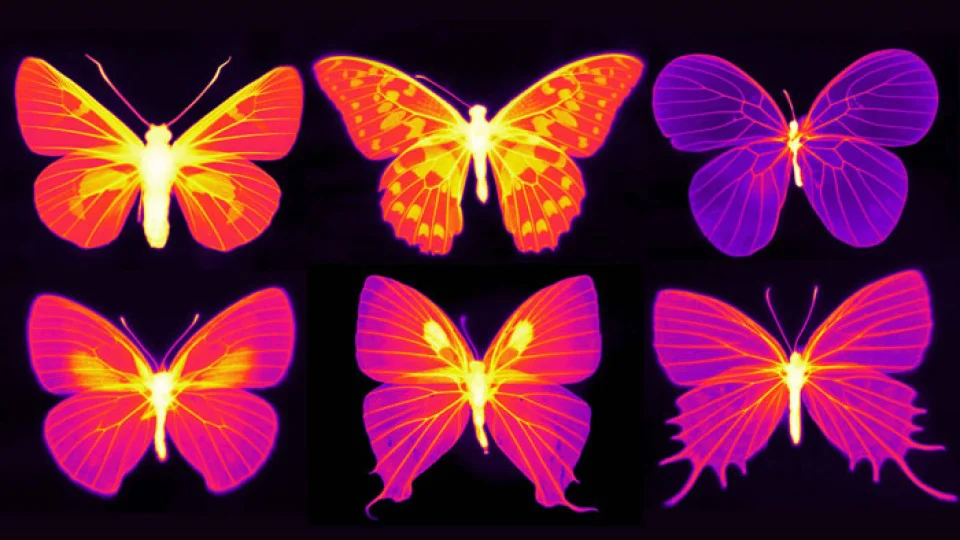
Infrared images showing thermal patterns across butterfly wings
COLUMBIA ENGINEERING / BIO-INSPIRED PHOTONICS

The living optics of a butterfly wing.

Infrared hyperspectral imaging revealed that butterfly wings are living thermal systems. Their nanostructures selectively enhance radiative cooling around veins and scent patches, while the wings also sense the direction and intensity of sunlight.

Read the story

Infrared imaging: Nanfang Yu and Cheng-Chia Tsai

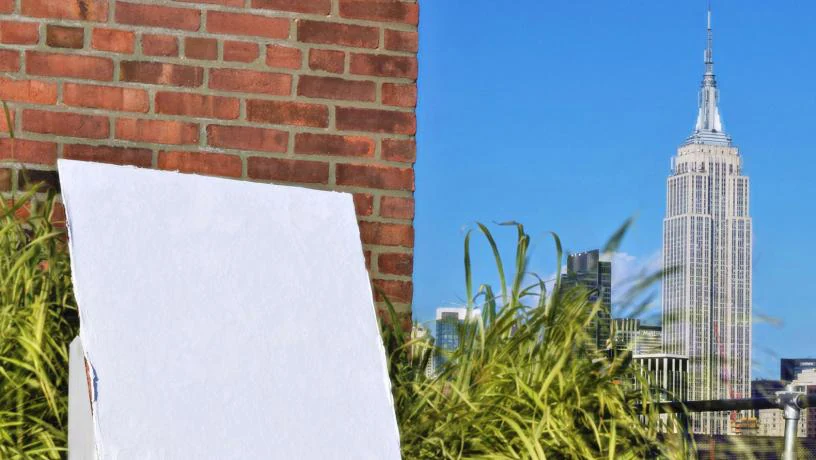
A white passive radiative-cooling polymer panel tested against the New York skyline
COLUMBIA ENGINEERING / RADIATIVE COOLING

White paint, reimagined as a heat sink.

A hierarchically porous polymer replaces pigment with light-scattering air voids. It reflects sunlight, emits thermal radiation to the sky, and achieves passive cooling in both arid and humid climates through a process compatible with paint-like fabrication.

Read the story

Photo: Jyotirmoy Mandal / Columbia Engineering

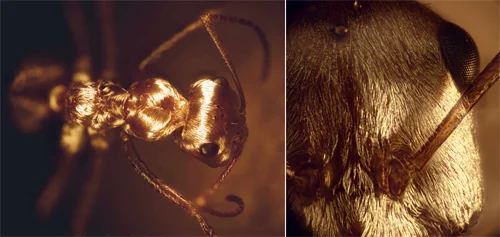
Saharan silver ant and a close view of its reflective hair coating
SCIENCE / BIO-INSPIRED PHOTONICS

How a silver coat survives the Sahara.

The Saharan silver ant's triangular hairs solve two thermal problems at once: they reflect solar radiation and help the insect shed heat in the mid-infrared. The discovery linked evolutionary optics to a new language for passive cooling surfaces.

Read the story

Images: Norman Nan Shi and Nanfang Yu

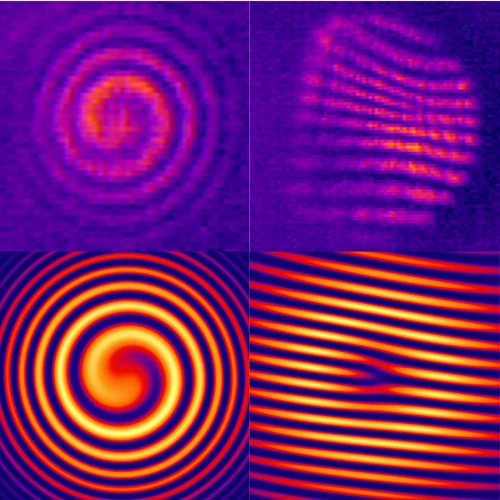
Measured and simulated vortex-beam interference patterns created by a phase-discontinuity metasurface
HARVARD SEAS / SCIENCE / PHASE DISCONTINUITIES

The phase discontinuity that opened flat optics.

In Federico Capasso's group at Harvard, lead author Nanfang Yu and colleagues showed that subwavelength optical antennas could write abrupt phase changes onto an interface, producing generalized laws of reflection and refraction. Led by Capasso as PI and corresponding author, the 2011 Science work became a foundation of modern metasurfaces.

Read the story

Image courtesy of Nanfang Yu / Harvard SEAS